Master Your Finances with Payment Agreement Design Templates
Transforming Professional Billing into a Brand Asset
In the world of business, clarity is king, but presentation is the power behind the throne. When it comes to getting paid, a generic spreadsheet or a plain text email often fails to convey the seriousness and professionalism of your brand. This is where the true value of high-quality Payment Agreement Design Templates comes into play. These are not just administrative forms; they are strategic design assets that bridge the gap between your creative output and the business transaction. By utilizing a structured template, you ensure that every invoice and agreement sent out reinforces your brand identity, turning a mundane administrative task into a touchpoint for client engagement.
The core utility of these templates lies in their dual function. First, they serve as a robust organizational tool, helping you list and count every piece of work on every project meticulously. Whether you are a graphic designer billing for hours, a photographer charging per image, or a consultant billing per deliverable, the structure ensures nothing is missed. Second, the design aspect elevates the document. It transforms a simple request for payment into a polished reflection of the work you have delivered. It is about sending an invoice that clients actually want to look at, making the process of getting paid smoother and faster.
The Anatomy of a Professional Template: Features and Flexibility
When evaluating Payment Agreement Design Templates, the technical specifications are just as important as the visual layout. A template that looks good but prints poorly is a liability. This specific collection is built on a foundation of professional standards to ensure your documents look crisp and professional in any format. The files are prepared at 300 DPI in A4 size with bleed, ensuring that the colors extend perfectly to the edge of the page without leaving unsightly white borders. This attention to print-ready details means you can send these files to a commercial printer or output them on your office laser printer with equal confidence.
One of the biggest hurdles with many design assets is the rigidity of the file format. However, these templates are designed with the end-user in mind, offering fully editable and customizable capabilities across the industry-standard software: Adobe Illustrator, Adobe Photoshop, and Microsoft Word. This versatility is crucial for the modern professional. A designer might prefer the vector control of Illustrator, while a small business owner managing their own books might find the familiarity of Microsoft Word more efficient.
Furthermore, the package includes AI, EPS, and JPEG files. The inclusion of vector formats (AI and EPS) means the design is scalable to any dimension without losing quality. You can resize elements, change the color mode, and manipulate the well-organized layers to match your specific brand palette. The use of free fonts is a particularly practical feature; it ensures that you do not need to purchase expensive premium font licenses just to edit your own invoice. This removes friction from the setup process, allowing you to get started immediately.
Visual Characteristics and Brand Perception
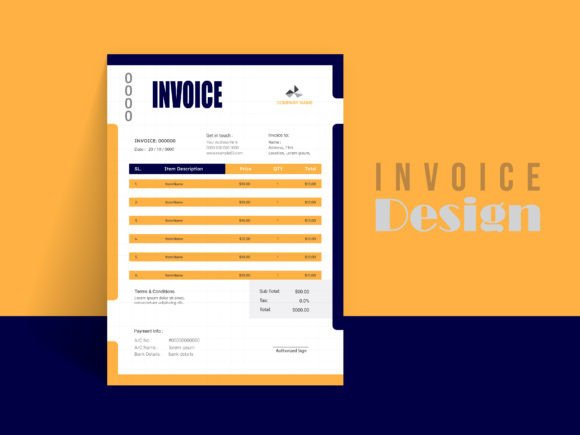
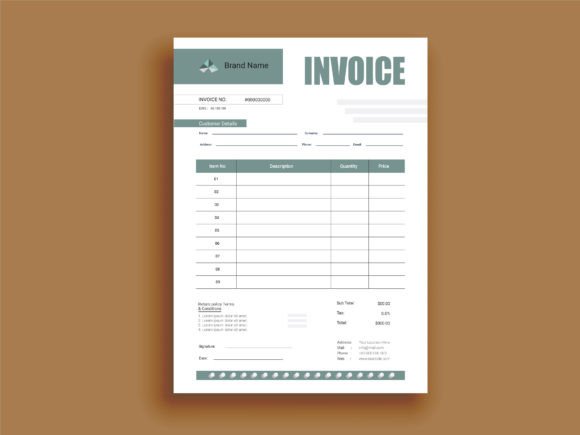
The visual personality of these Payment Agreement Design Templates leans towards a clean, modern aesthetic that balances professionalism with approachability. In the realm of brand identity, consistency is the key to recognition. When your invoice matches the visual language of your portfolio, website, or social media graphics, it signals attention to detail. The design utilizes smart typography and ample white space to guide the reader's eye, creating a clear visual hierarchy. This ensures that the total amount due is distinct from the itemized list of services, reducing confusion and speeding up the payment cycle.
While these are document templates rather than a standalone typeface, the typography choices within the design play a massive role in the document's success. The layout relies on modern typography principles, utilizing clean sans-serif fonts for data entry areas to maximize readability. This is essential for editorial design applied to business documents; the goal is to present complex information—such as project scopes, tax rates, and payment terms—in a way that is effortless to digest. The design does not distract from the data; it supports it.
Practical Applications Across Industries
The versatility of these templates makes them a valuable asset for a wide range of professionals. For entrepreneurs and small business owners, these files provide a "business-in-a-box" solution for billing. You do not need to hire a graphic designer to create a custom invoice system; you simply download, customize, and send. This is particularly useful for those in the crafting or hobbyist sectors who are turning their passion into a commercial venture. A professional invoice lends legitimacy to a side hustle, helping to transition it into a full-time business.
For designers, marketers, and agencies, these templates serve as a time-saving boilerplate. Instead of building a new invoice from scratch for every client, you can maintain a master file. The vector design elements allow for easy customization of logos and color schemes to match specific client branding if you are working on a retainer basis. This adaptability is also beneficial for packaging design firms or web design agencies that need to bill for complex, multi-faceted projects. The ability to list every piece of a project ensures that scope creep is accurately billed and documented.
Maximizing the Utility of Your Invoice System
To get the most out of your Payment Agreement Design Templates, consider how they fit into your broader workflow. An invoice is not just a bill; it is often the last touchpoint a client has with you until the next project. A well-designed document can leave a lasting positive impression, increasing the likelihood of repeat business.
Here are practical steps to integrate these templates effectively:
- Brand Alignment: immediately open the file in your preferred software and input your brand’s hex codes. Ensure the color mode (CMYK for print, RGB for digital) is set correctly for your delivery method.
- File Management: Save a "Master" version that is never edited, and create a "Working" copy for each new client or project. This preserves the integrity of the original design assets.
- Readability Check: Before sending, print a test page. Check that the serif or sans serif fonts used for the fine print (terms and conditions) are legible at the final print size.
- Digital vs. Print: If you primarily send digital invoices via email, the JPEG or PDF export is ideal. If you mail physical copies, the print ready file specifications ensure high-quality output.
Ultimately, the goal is to streamline your administrative tasks so you can focus on the creative work you love. By using high-quality, customizable templates, you ensure that your business infrastructure is as polished as your portfolio. It is an investment in professionalism that pays dividends in client trust and operational efficiency.