30 Flowers Templates: A Complete Toolkit for Modern Creators
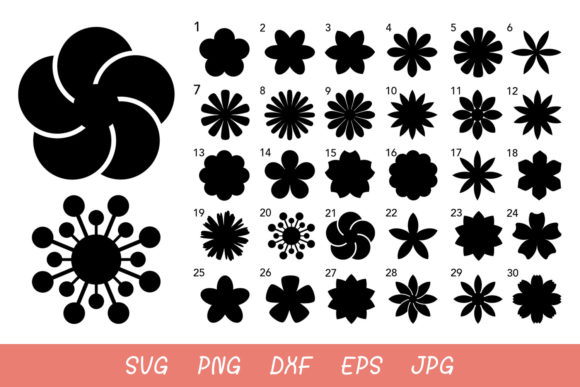
Finding the right visual assets can often feel like searching for a needle in a haystack, especially when you are trying to balance quality with versatility. Enter the 30 Flowers Templates, a comprehensive collection designed to bridge the gap between professional design needs and accessible creative tools. This isn't just a random assortment of botanical illustrations; it is a curated set of design assets tailored for the modern workflow. Whether you are a graphic designer working on a tight deadline or a small business owner trying to elevate your brand presence, this collection offers a robust solution. The package includes 30 SVG files, 30 EPS files, 30 PNG files, 30 DXF files, 30 jpg files, and 1 jpg preview, ensuring you have the exact format required for any software or platform.
The Anatomy of the Collection: What Makes These Assets Stand Out?
When we talk about the visual characteristics of the 30 Flowers Templates, we are looking at a blend of elegance and usability. The style leans into contemporary botanical art, capturing the intricate details of flora without becoming overly cluttered or difficult to reproduce. This is crucial for modern typography and layout integration. You want illustrations that complement your text, not compete with it. The personality of these templates is versatile; they can feel romantic and soft for a wedding invitation, or bold and structured for a corporate wellness brand, depending on how you color and scale them.
The appeal lies in the file variety. The SVG (Scalable Vector Graphics) and EPS (Encapsulated PostScript) files are the workhorses here. They allow for infinite scalability, meaning you can blow a single flower up to the size of a billboard or shrink it down for a favicon without losing a pixel of quality. This vector capability is essential for logo design and professional printing. Meanwhile, the inclusion of DXF files makes this collection a goldmine for crafters. If you own a Cricut or Silhouette machine, DXF is the native language for cutting precise shapes out of vinyl, cardstock, or fabric. The PNG files offer transparency, which is perfect for layering images in social media graphics or quick mockups, while the JPG files serve well for digital previews or backgrounds where transparency isn't needed.
Strategic Applications: Where These Templates Shine
Understanding where to deploy the 30 Flowers Templates is key to maximizing their value. In the realm of brand identity, consistency is king. These assets allow you to build a cohesive visual language. For example, a boutique hotel could use the SVG files to create custom watermarks for their stationery and the PNG files for their Instagram stories, ensuring the same visual motif appears across all touchpoints.
For editorial design and packaging design, these templates offer immense flexibility. Imagine a skincare brand launching a new organic line. Instead of hiring an illustrator for every single variation, they can use these vector files to create intricate borders for their labels or spot illustrations for their instruction manuals. The EPS format is particularly useful here, as it integrates seamlessly with professional software like Adobe Illustrator, allowing for deep customization of line weights and colors to match specific brand palettes.
Furthermore, the digital space benefits heavily from high-quality vectors. In web design, large, bloated image files can slow down site speed, hurting your SEO. Because the 30 Flowers Templates include SVGs, web developers can code these graphics directly into the site, resulting in crisp visuals that load instantly on any screen size. This is a technical advantage that directly impacts user experience and search engine rankings.
Design Intelligence: Using Templates to Enhance Visual Hierarchy
A common mistake in design is treating illustrations as mere decoration. However, when used correctly, assets like the 30 Flowers Templates can actively influence readability and visual hierarchy. Think of these florals as directional cues. A subtle arrangement of leaves can guide the reader’s eye from a headline down to the body text. In editorial design, a large floral element in the margin can break up dense blocks of text, making a page feel less intimidating and more inviting.
When pairing these templates with typefaces, contrast is your best friend. If you are working with a delicate script font for a wedding invitation, you might choose a bolder, more defined floral vector to ensure the background doesn't get lost. Conversely, if your layout relies on a heavy sans serif font for a modern poster, using the negative space within the floral SVGs can create a sophisticated, layered look. This interplay between the organic shapes of the flowers and the structured geometry of modern typography creates a dynamic tension that captures attention.
Consider the psychology of the design as well. Flowers inherently evoke emotion—growth, nature, celebration, or sympathy. By integrating the 30 Flowers Templates into your brand identity, you are tapping into these subconscious associations. A financial advisor might use them sparingly to suggest "growth," while a bakery uses them generously to suggest "fresh ingredients." The versatility of the collection allows you to control this narrative precisely.
Practical Workflow: Integrating Assets into Your Projects
To get the most out of the 30 Flowers Templates, you need a practical workflow. First, always start with the vector files (SVG or EPS) whenever possible. Even if your final output is a raster image (like a JPG for a website), starting with vectors gives you the most editing power. You can change colors to match your brand hex codes, ungroup elements to isolate specific petals, or combine multiple templates to create a new composition.
For those in the crafting community, the DXF files are your starting point. Import these into your cutting machine software. A useful tip is to test cut a small section of the design first, especially if the floral pattern has intricate vines or thin leaves. This ensures your material settings are correct before you commit to a full sheet of expensive vinyl or cardstock.
When it comes to font pairing, treat the floral vectors as you would a display font. They have a strong presence. If your layout features a complex floral header, keep your body copy in a clean, legible serif font or sans serif font. Avoid using other highly decorative elements that might clash with the organic curves of the flowers. The goal is harmony, not chaos.
Licensing and Longevity: A Smart Investment
One of the most significant advantages of a collection like this is the potential for commercial licensing. For entrepreneurs and small business owners, purchasing assets with clear usage rights is a risk management strategy. Using the 30 Flowers Templates in your commercial projects—whether it’s merchandise, digital products, or client work—provides a professional polish that stock photos often cannot achieve.
This collection serves as a creative font for imagery. Just as a premium font elevates a document, high-quality vectors elevate a visual design. They save time, reduce the need for custom illustration in the early stages of a project, and provide a consistent aesthetic. Whether you are designing a menu for a cafe, a header for a newsletter, or graphics for a conference, having a library of 30 distinct floral options ensures you won't run out of inspiration.
Ultimately, the 30 Flowers Templates are more than just files; they are a toolkit for storytelling. They allow designers, marketers, and creators to inject personality and professionalism into their work with minimal friction. By leveraging the variety of formats—from SVG for web to DXF for craft—you future-proof your design process, ensuring you are ready for whatever medium the next project demands.